From the opening proposition through product, provenance and collection content.
Pansuara
Pansuara is a vertically integrated teak brand launching DTC on Shopify, with Amazon expansion ahead. I've been involved across the eCommerce journey - from deciding what we should sell and how we position it to the customer experience, storefront, integrations and launch.
Pansuara is a vertically integrated teak brand launching direct-to-consumer on Shopify and expanding to Amazon. I joined before the commerce model was fully defined and have worked across product, brand, customer experience, technology and launch.
I wanted to understand both what was worth selling and what made sense to start with. I used market data and unit economics to narrow the first category, choosing a product we could manufacture consistently, ship efficiently and use to build the brand before moving into harder-to-copy categories.
The journey doesn't stop at checkout.
I also built the lifecycle around the storefront in Klaviyo - welcome, abandoned cart, post-purchase and referral / store-credit journeys, plus a separate lead journey for Teak Parcels.
A friend places their first order → the referrer's store credit is issued automatically → Klaviyo picks up the event, sends the credit email and a reminder before expiry. The referral system is implemented, the Klaviyo flow is live and configured, and the email is a real delivered test email - not a designed mockup. Pansuara is pre-launch, so no customer traffic runs through it yet.
Teak Parcels targets investor prospects, not store customers. It gets its own landing experience, separate lead capture, a dedicated Klaviyo list and its own lifecycle flow.


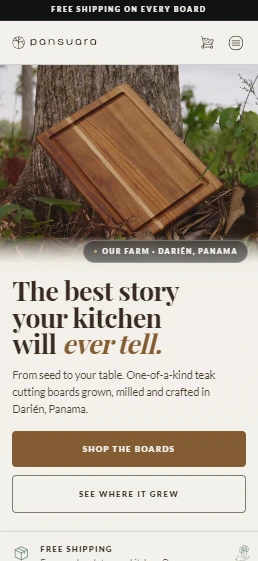
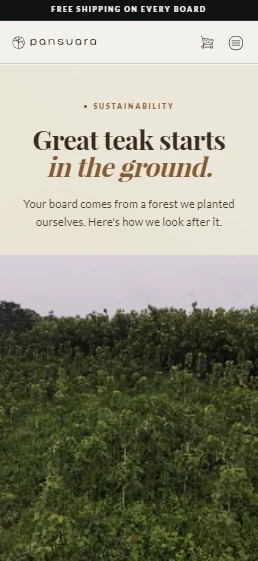
Current responsive production captures. Choose a device, move between pages, or open a complete page and scroll it at full resolution.
Short recordings show how the current build behaves between static checkpoints. They are captured from the public pre-launch storefront and play only when requested.
The purchase area remains visible before the page moves into materials, build and sourcing evidence.
The mobile hierarchy and persistent add-to-cart are visible while the product story continues.
From design to production.
The experience is worked out in Claude Design first - then built to match in Hydrogen.
I work through the experience in Claude Design before I touch production code - layouts, states, interactions and variants. The prototype is interactive and shareable, so the team can explore it, test options and make tweaks with me before I build it in Hydrogen. Once we're happy with it, I build that experience as closely as possible.
Size variants with live pricing, the free-engraving studio, review and pre-order states - worked out in the prototype before implementation.
The brand identity and artwork came from a branding agency. I helped shape and review the digital direction - scored the naming shortlist, recommended Pansuara, challenged parts of the direction. Then I took the finished brand and worked out how it actually behaves as a digital product: components, states, devices and the storefront itself.

Shopify Hydrogen · Storefront API · Customer Account API · Admin API
Customer account · referral / store-credit system · returns · content / metaobjects
Klaviyo · Judge.me · lifecycle flows · lead capture
Oxygen / Cloudflare · SEO · Search Console · Merchant Center
Performance is treated as part of the build, not something added at the end. The full result is shown - the 74 on Best Practices is real and being worked on, and mobile is lower and still being optimized.
Worked through the less-visible launch work too - Shopify setup, payments, domains and hosting, Google infrastructure (Search Console, Merchant Center), lifecycle tooling, reviews, fulfillment, tax and compliance questions, and vendors.